

















































Clematis ‘Multi Blue’ – Care, location, growth & frequently asked questions
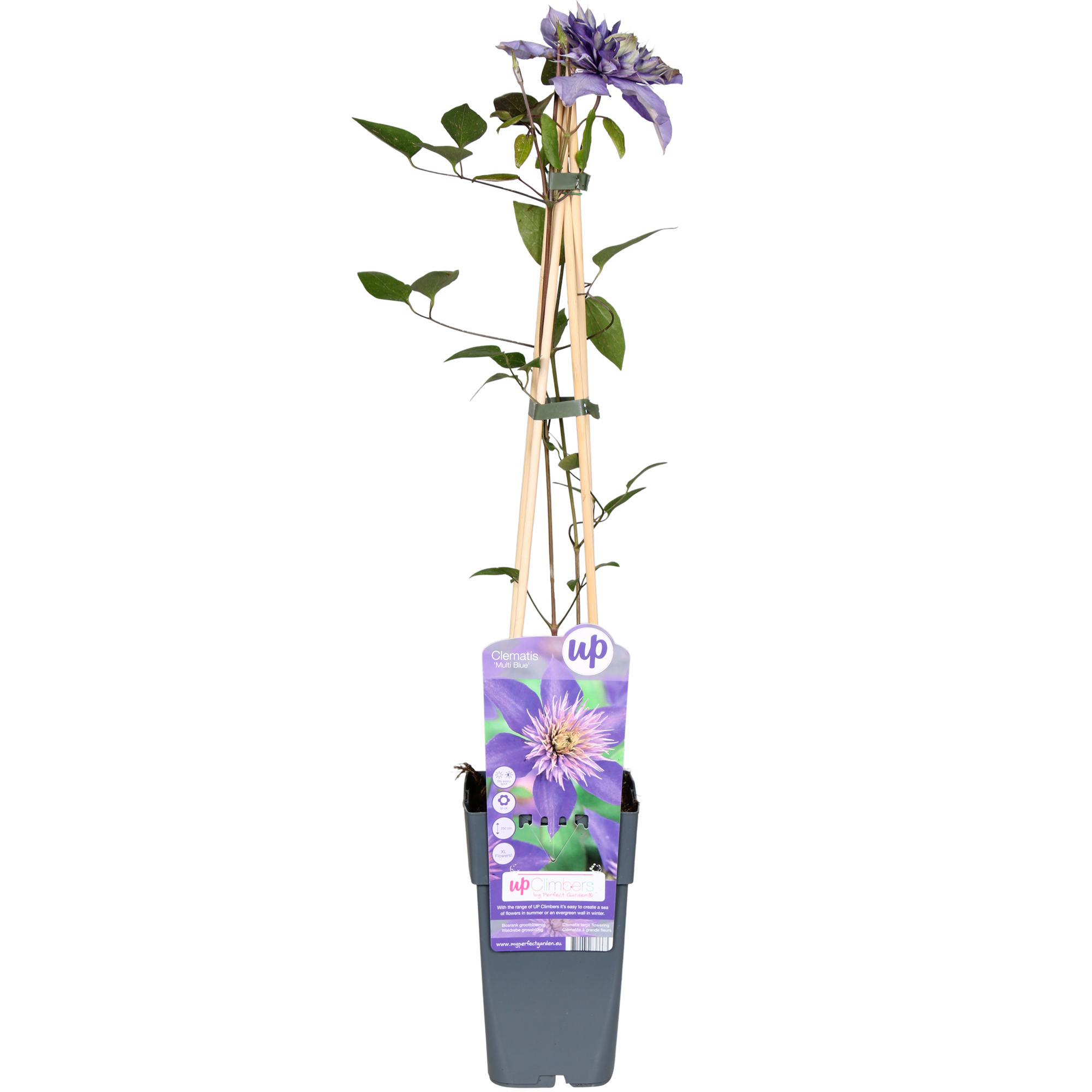
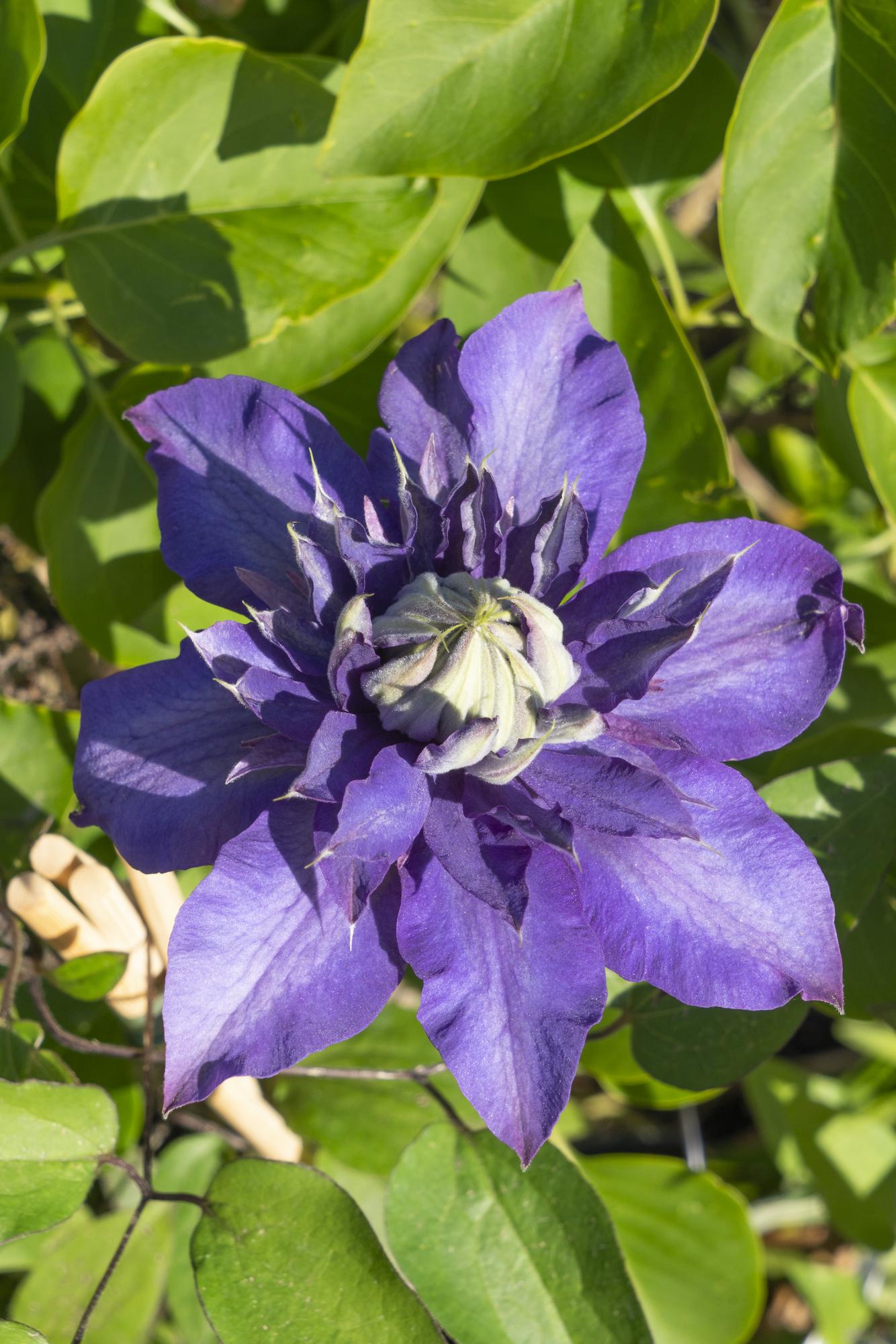
The Clematis ‘Multi Blue’ is one of the most popular large-flowered clematis varieties. Its extraordinary, double-looking blue-violet blooms make it a real eye-catcher on pergolas, trellises, or house walls.
We highly recommend a well-developed young plant such as the Clematis ‘Multi Blue’ in a 15 cm pot , which, at around 65 cm tall, provides the ideal starting conditions for vigorous new growth.
Origin & characteristics of the Clematis ‘Multi Blue’
Where does Clematis ‘Multi Blue’ come from?
The ‘Multi Blue’ variety is a modern cultivar within the large-flowered clematis group. It combines a compact growth habit with a particularly intense floral effect.
- Large-flowered, double blooms
- Blue-violet color nuances
- Second bloom possible in late summer
- Well suited for containers and gardens
Appearance & growth
What do the flowers of the Clematis ‘Multi Blue’ look like?
The strikingly large flowers appear densely double and shimmer in shades of blue, violet, and purple, depending on the light. This gives each bloom a particularly vivid and sophisticated appearance.
How fast does Clematis ‘Multi Blue’ grow?
This clematis grows at a moderate to vigorous rate, reaching a height of approximately 2 to 3 meters. This makes it suitable even for smaller gardens or larger planters.
With a well-established Clematis ‘Multi Blue’ , you can achieve a visible greenery effect in the very first year.
Ideal location for Clematis ‘Multi Blue’
What is the ideal location?
Clematis ‘Multi Blue’ prefers a sunny to partially shaded location. It is important that the root area stays cool while the stems receive sufficient light.
- Sun to partial shade
- Sheltered spot from wind
- Loose, humus-rich soil
- Shaded root area
Care & watering
How often should you water Clematis ‘Multi Blue’?
During the growth phase, it should be watered evenly. Waterlogging must be avoided at all costs, as it can damage the roots.
- Water regularly but moderately
- Keep the soil evenly moist
- Mulch protects against drying out
Fertilizer for intense flower color
Organic fertilization in the spring as well as a light follow-up application after the first bloom support vigorous repeat flowering.
Typical problems & solutions
Why is my Clematis ‘Multi Blue’ blooming poorly?
- Too little light
- Incorrect pruning
- Nutrient deficiency
An optimal location, adapted pruning, and regular care ensure lush flower development.
Propagation & pruning
How is Clematis ‘Multi Blue’ properly pruned?
This variety belongs to pruning group 2. A light prune in early spring, as well as a shaping prune after the first bloom, encourages compact growth and a second flowering phase.
Frequently asked questions about Clematis ‘Multi Blue’
Is Clematis ‘Multi Blue’ hardy?
Yes, it is very hardy. A light winter protection in a container provides additional protection for the roots.
Is Clematis ‘Multi Blue’ suitable for a container?
Yes, thanks to its moderate growth, it is ideal for larger containers on balconies or patios.
Does Clematis ‘Multi Blue’ bloom more than once a year?
Usually, it shows a main bloom in early summer and a second, somewhat lighter bloom in late summer.
Take action now:
With the right location, adapted pruning, and consistent care, the Clematis ‘Multi Blue’ will develop into a perpetually free-flowering climbing plant. The pre-grown young plant provides the perfect foundation for this.