




































Syngonium ‘Pixie’ – Care, Location & Tips for the Arrowhead Plant
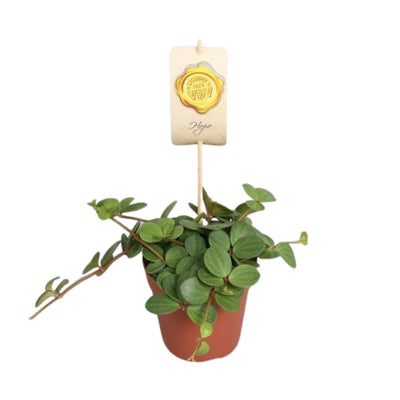
Small, compact, and incredibly high-contrast: The Peperomia ‘Hope’ is a hybrid that brings together the best of both worlds. Wait—no! We are talking about the Syngonium ‘Pixie’! This dwarf variety of the arrowhead plant is the favorite of every urban jungle fan who has limited space but doesn't want to sacrifice spectacular leaf patterns. In this guide, you will learn how to successfully care for your Syngonium.
Origin & Characteristics
The Syngonium originates from the tropical rainforests of Central and South America. The ‘Pixie’ variety is a specially bred dwarf form that remains significantly smaller than its climbing relatives. When you buy a Syngonium ‘Pixie’, you are bringing an adaptable plant into your home that also boasts excellent air-purifying properties.
Appearance & Growth
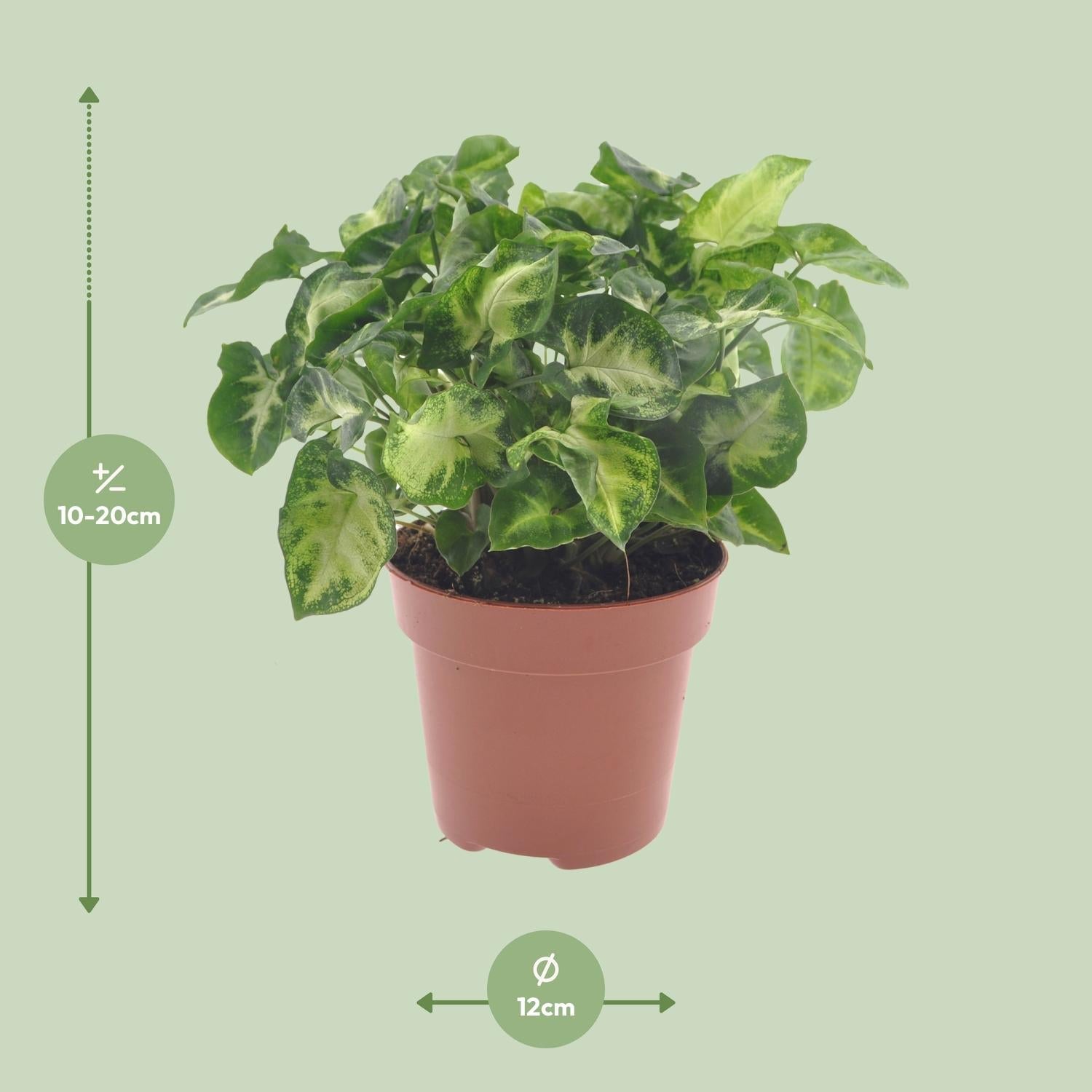
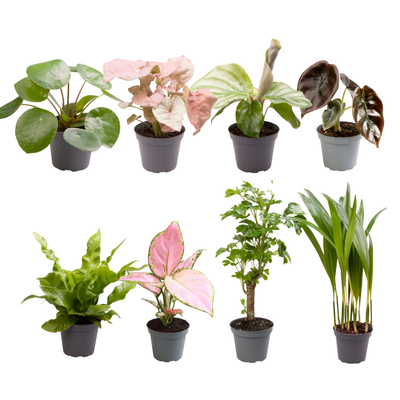
The ‘Pixie’ is characterized by its arrow-shaped leaves, which are bright white to cream in the center and feature a deep green border. With a delivery size of 20-30 cm, the Syngonium ‘Pixie’ remains pleasantly small and grows more bushy than trailing. This makes it the perfect choice for desks, shelves, or terrariums.
The Right Location for Your Arrowhead Plant
Where does the Syngonium Pixie show off its most beautiful colors?
Light is the key to intense leaf coloration. If it is kept too dark, the leaves will lose their high white content and become increasingly green.
- Light: Bright to partial shade, without direct midday sun. Indirect light is ideal.
- Temperature: Warm all year round (18–24 °C). It does not like temperatures below 15 °C.
- Humidity: Increased humidity promotes growth. It will thank you for regular misting with glossy foliage.
Care & Watering: Caring for your Syngonium Pixie
How to gauge water needs correctly
When caring for your Syngonium Pixie, you should pay attention to balanced watering habits. The substrate should be kept evenly moist, but the surface can be allowed to dry out slightly. Waterlogging must be strictly avoided with the Syngonium ‘Pixie’, as the fine roots are sensitive to excessive moisture.
Typical Problems & Solutions
Why do the edges of my Syngonium's leaves turn brown?
Brown, dry tips are usually a sign of overly dry room air or inconsistent watering. Yellow leaves can indicate waterlogging or nutrient deficiency. If the plant loses its compact shape and starts growing "long necks," your arrowhead plant is likely in a spot that is too dark.
✨ Care Tip: Syngoniums are excellent for hydroponics or semi-hydroponics (e.g., with expanded clay). This simplifies water supply and ensures consistently high moisture at the roots.
Prevention & Long-term Health
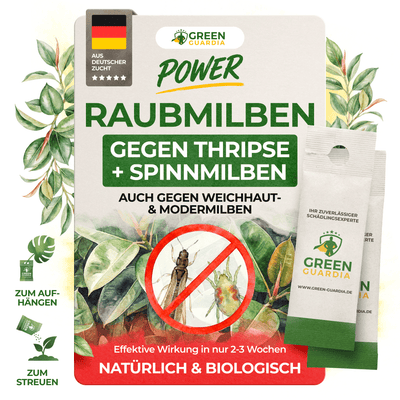
Use a loose, well-draining substrate. During the growth phase from March to September, the Pixie will appreciate a dose of liquid fertilizer at half-strength every two weeks. To support overall plant health and prevent pests like spider mites, you can strengthen the plant with natural leaf care products.
FAQ about the Syngonium Pixie
Is the Syngonium Pixie toxic to cats?
Yes, like all aroids, it contains calcium oxalate crystals that can cause irritation of the mucous membranes if ingested. Therefore, keep it out of the reach of pets.
Can I prune the Syngonium Pixie?
Absolutely! Regular pruning helps the plant stay nice and compact and bushy. The cuttings root very quickly in water.
How often do I need to repot the arrowhead plant?
Since the Pixie is a slow grower, repotting every 2 to 3 years in the spring is perfectly sufficient.
Take action now:
The Syngonium ‘Pixie’ is the perfect choice for anyone looking for an easy-care plant with a big visual impact in a small space. With its charming foliage, it brings brightness to any plant collection. Keep an eye on indirect light and moderate humidity, and this little arrowhead plant will be a long-time companion.
Get your compact splash of color! Order your healthy Syngonium ‘Pixie’ from us now and add this botanical gem to your home!