





























































Protecting against carpet beetles: natural solutions and prevention
Carpet beetles (commonly known as carpet beetles in household and storage areas) can quickly become a real problem – especially if they develop in textiles, pet food, stored goods, or quiet, dusty corners. The good news: with a clear system of root cause analysis, monitoring, and natural measures, the level of infestation can usually be well controlled – without unnecessary stress and without "blanket spraying" campaigns.
Causes: Where do carpet beetles come from?
In many cases, carpet beetles enter the house through open windows, incoming goods, or second-hand textiles. Interestingly, it is often not the adult beetles that are the main problem, but the larvae – they find food in animal fibers, dust bunnies, or organic residues.
- Natural fiber textiles (e.g., wool, felt, carpets)
- Dust bunnies under furniture, along baseboards, and in crevices
- Pet areas (food, beds, blankets) with hair/residue
- Stored goods and packaging (cardboard boxes, sacks, quiet storage rooms)
Detection: How do you spot an infestation?
It is typical to first see individual beetles on the window, but the actual infestation is often hidden. Therefore, look specifically for larval traces and "hotspots": dark, quiet corners, textile areas, and places where dust accumulates.
- Small beetles on windowsills or near lamps
- Larvae (small, brownish, often with fine bristles) in crevices/under carpets
- Larval skins (molting remains) in corners or along baseboards
- Irregular damage to wool textiles, felt, or carpets (patchy/in specific spots)
Control: Natural measures that really help
If you want to combat carpet beetles, the most important step is: find and remove the breeding grounds. This is the only way to break the cycle. Natural solutions work best when combined with consistent hygiene and monitoring.
1) Immediate measures at home
- Vacuum thoroughly: baseboards, under furniture, carpet edges, crevices (dispose of or clean the bag/container immediately afterward)
- Check textiles: wool items, blankets, felt, carpets – wash infested pieces in hot water or have them professionally cleaned
- Remove dust bunnies: behind cabinets, under beds, in storage rooms
- Clean pet areas: wash beds/blankets, keep feeding areas clean
2) Monitoring & targeted control with an attractant trap
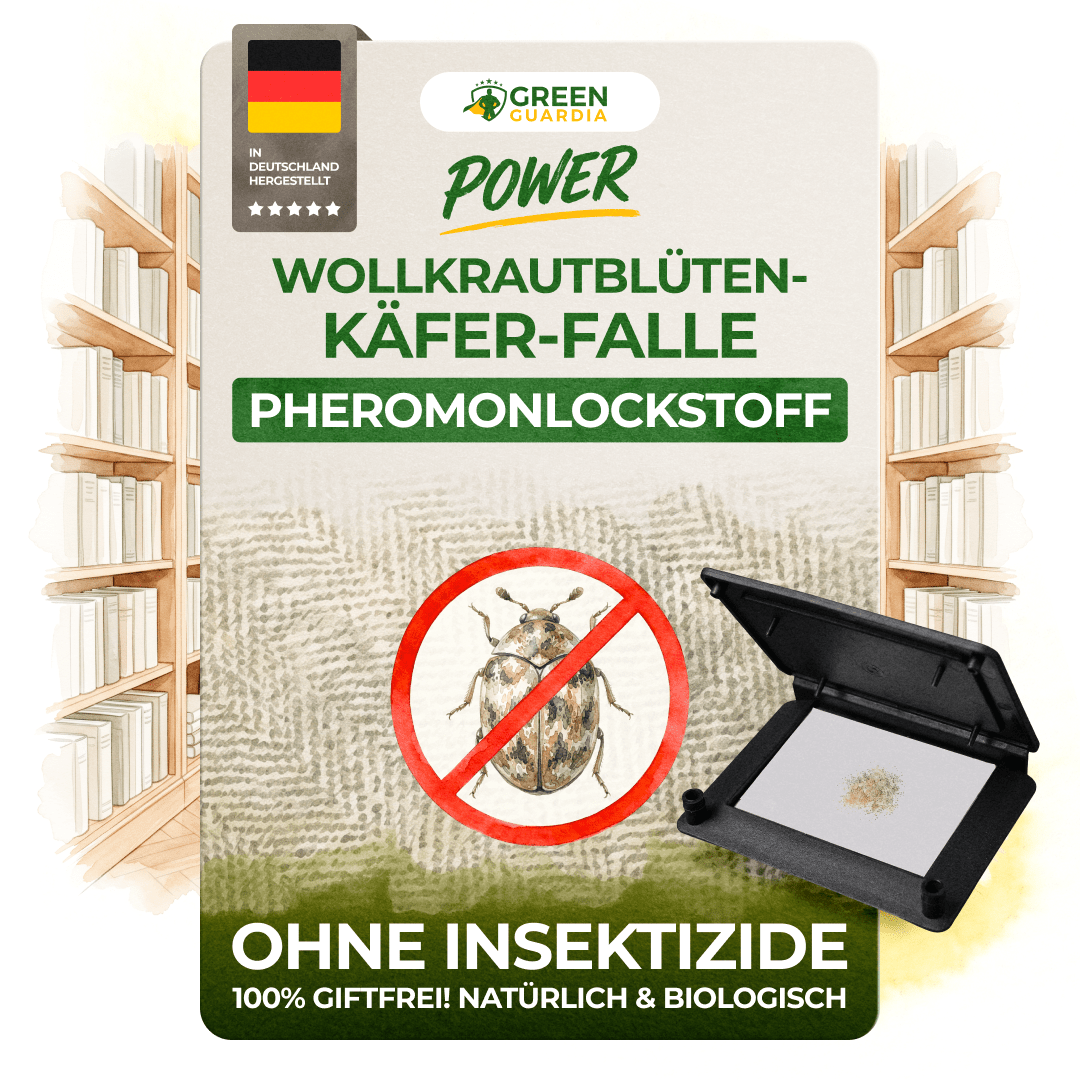
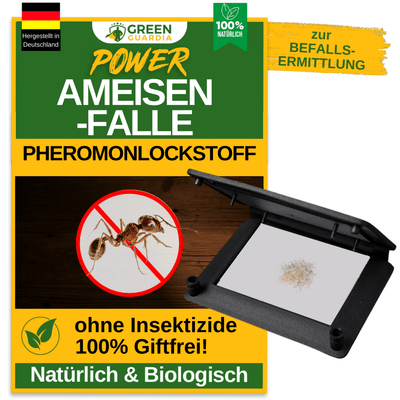
To make the level of infestation visible and identify hotspots, monitoring is extremely helpful. For targeted control, a carpet beetle trap with a special attractant is suitable – place it in quiet areas (e.g., storage room, near wardrobes, carpet zones) to detect activity early and better manage your measures.
3) Natural support through beneficial insects (for larval/egg pressure)
If the infestation recurs or you have multiple areas of activity, biological support can be useful. Predatory bugs, which are active in hidden zones, are often used as natural antagonists in storage and pantry environments.
A suitable, natural addition can be Lagerpiraten (warehouse pirates) – especially if you are looking for sustainable support as part of an integrated approach (cleaning + monitoring + targeted biological measures).
Prevention: How to avoid new infestations in the long term
Prevention is key when it comes to carpet beetles. If you make typical breeding grounds permanently unattractive, you significantly reduce the risk – especially in households with many textiles, carpets, or pet areas.
- Regularly clean edges: baseboards, carpet edges, under furniture
- Store textiles protectively: wool/felt in boxes or tightly sealed bags
- Seal crevices: baseboards, cable passages, small gaps
- Check incoming goods: do not store second-hand carpets, blankets, or boxes without checking them first
- Use monitoring: use traps selectively if there is a recurring risk
Tip: If you suspect carpet beetles, it is worth doing a "hotspot sweep": under the sofa/bed, along the baseboards, on the undersides of carpets, and in pet areas – this is where you will usually find the crucial evidence.
Frequently asked questions about carpet beetles
How can I be sure it's carpet beetles?
Often, individual beetles on windows are the first sign. For a reliable assessment, however, the larvae and traces are important: larval skins, larvae in crevices, and spot damage on wool textiles or carpet edges. Check typical hotspots (baseboards, under furniture, textile storage areas).
Why do carpet beetles keep coming back?
Usually, a breeding ground remains undiscovered: dust bunnies, areas under furniture, rarely used textiles, or pet areas. If these zones are cleaned consistently and textiles are stored securely, the risk of re-infestation drops significantly.
What is more important: traps or cleaning?
Cleaning is the foundation – it removes food sources and breeding grounds. A trap is then very helpful for measuring activity, finding hotspots, and making the success of your measures visible. The combination of both is most effective.
How long does it take to get the infestation under control?
That depends on the severity of the infestation and the hotspots. If breeding grounds are consistently removed and monitoring is in place, a clear improvement is often seen within a few weeks. The decisive factor is preventing subsequent generations and keeping things clean in the long term.
Conclusion: Carpet beetles can be well controlled with a clear, natural approach: find hotspots, clean thoroughly, protect textiles, and keep an eye on activity via monitoring. This way, you reduce infestation pressure sustainably and prevent re-infestation.
Take action now: Start with a hotspot clean-up and use a carpet beetle trap with a special attractant for targeted control. If you would like additional biological support, Lagerpiraten can be a suitable addition as part of an integrated concept.