

















































Identifying crane flies and combating larvae with SC nematodes
Bare patches in the lawn and gray-brown larvae under the turf may indicate crane fly larvae. Our SC nematodes against crane flies help target young larvae effectively. The right timing is crucial: treatment starts in autumn before older larvae cause major damage in the following spring.
What are crane flies?
Crane flies are long-legged insects with a mosquito-like appearance. The species Tipula paludosa is particularly relevant for lawn damage. The actual problem is their larvae in and on the soil.
What do crane fly larvae look like?
The larvae are gray-brown, cylindrical, and legless. Their skin feels firm and leathery. Older specimens reach several centimeters in length. They differ significantly from the mostly pale, C-shaped white grubs with three pairs of legs.
Crane flies in the lawn: Typical signs
- Patchy, yellowish, or bare areas in the lawn.
- Eaten grasses and weakened turf.
- Gray-brown larvae in the shallow soil layer.
- Additional damage caused by animals searching for larvae.
Crane fly larvae or white grubs?
| Characteristic | Crane fly larvae | White grubs |
|---|---|---|
| Body | Gray-brown, cylindrical, leathery appearance. | Mostly creamy white and often C-shaped curved. |
| Legs | No legs. | Three pairs of legs behind the head. |
| Suitable treatment | SC nematodes against young larvae. | Identify species and select appropriate nematodes. |
How do crane fly larvae develop in the garden?
After the adult crane flies fly, the eggs end up in the lawn soil. The larvae hatching from them develop through several stages. Young larvae feed at night on above-ground plant parts, among other things.
After overwintering, older larvae continue their feeding activity. Therefore, noticeable lawn damage may only become visible months after egg laying. When combating them, it is sensible to preempt this damage with a timely planned treatment.
Our solution: SC nematodes against crane flies
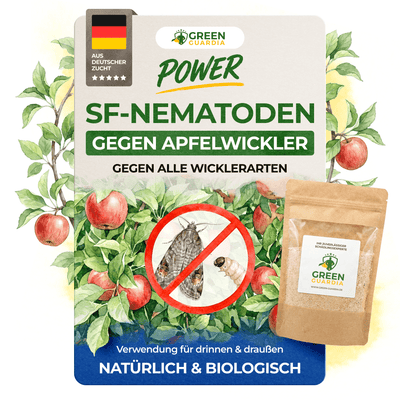
Our SC nematodes contain beneficial organisms of the species Steinernema carpocapsae. They are applied with water to the treatment area and work against suitable young crane fly larvae.
Green Guardia SC nematodes
Have you already had crane fly damage in your lawn? Plan the treatment of the new generation of larvae early. Our SC nematodes are suitable for targeted use against the young stages.
- Goal: young crane fly larvae in the appropriate development stage.
- Application: mix with water and apply evenly.
- Planning: orient based on local crane fly flight and larval development.
- Pack selection: according to the lawn area to be treated.
How do SC nematodes work?
The microscopic roundworms infect suitable host larvae. Together with their symbiotic bacteria, they can cause them to die off. For application, the living beneficials are stirred into water.
Benefits and requirements at a glance
- Targeted approach: Treatment targets the damaging larvae.
- Practical application: Applied via a water solution.
- Plannable for lawns: Choose the pack size to match your square meters.
- Important for success: Larval stage, temperature, and moisture must be right.
When to combat crane flies with nematodes?
For Tipula paludosa, the important treatment window is usually from September to early October. A good guideline is approx. two weeks after the local peak flight. The decisive factor is the young larval stages L1 and L2.
For this application, the soil should have a temperature above 12 °C and remain sufficiently warm during the following week as well. Check the soil temperature and follow the current product instructions.
Selecting and applying SC nematodes correctly
Which pack size do you need?
Measure the intended treatment area in square meters. Then select the corresponding variant on our product page for SC nematodes . Do not distribute a single pack over a larger area than specified in the application recommendations.
Step-by-step application
- Check timing: Young larvae and sufficiently warm soil are the basis of treatment.
- Prepare soil: Pre-water dry areas. The soil should be damp, but not waterlogged.
- Prepare mixture: Stir nematodes into water according to package directions. Stir the solution regularly during application.
- Apply evenly: Treat the entire intended area. Avoid direct sunlight and intense heat.
- Post-water: Flush the beneficials into the shallow soil according to the instructions.
- Maintain moisture: Keep the soil evenly moist for at least 14 days afterwards.
Order the beneficials to match your planned use. After delivery, follow the instructions for storage, shelf life, dosage, and water volume.
What helps with already visible lawn damage?
First, determine the cause. Document affected areas and existing larvae before renovating the lawn area. Depending on condition, overseeding and adjusted maintenance are options for repair.
- Carefully remove dead lawn debris.
- Overseed bare spots to match the season.
- Keep fresh seeding adequately moist.
- Protect weakened areas from excessive stress.
- Observe and note the next crane fly flight.
Frequently asked questions about crane flies
Which nematodes help against crane flies?
SC nematodes of the species Steinernema carpocapsae are suitable for treating young crane fly larvae. You can find them with us as Green Guardia SC nematodes .
Can I treat crane fly larvae in spring?
The older larvae present at that time are significantly less favorable for this nematode treatment. Plan the application against the young generation in autumn instead of waiting for visible spring damage.
Do I need to combat flying crane flies?
To protect the lawn, targeted treatment of suitable larval stages is the more important approach. Observe crane fly flight to better narrow down the application time.
Are crane fly larvae the same as white grubs?
No. Crane fly larvae are legless and gray-brown. White grubs are beetle larvae with three pairs of legs. The distinction is important because treatment and timing differ.
Why must the lawn remain moist after application?
Nematodes need moisture to move around and reach suitable larvae. Keep the soil moist after application according to the instructions without creating waterlogging.
Will the lawn turn green again immediately with SC nematodes?
No. The beneficials serve to control larvae. Bare patches that have already formed require additional care and possibly overseeding.
Should I use SC nematodes regularly 'just in case'?
Application should match infestation history, larval development, and soil conditions. For recurring damage, observing crane fly flight helps plan the next application in a targeted manner.