
































Identifying root flies and combating larvae with nematodes
Wilting brassicas and white maggots on the roots can indicate an infestation of root flies. Our nematodes against root flies provide a biological method to target larval stages in the root zone. Here you will learn how to identify an infestation, plan the application, and protect new plants.
What are root flies?
In the vegetable patch, the cabbage root fly with the scientific name Delia radicum is particularly relevant. The adult flies resemble small houseflies and are not easily identified with certainty at first glance.
The decisive damage is caused by their larvae on the roots. Therefore, simply seeing a fly near brassica plants does not prove an infestation.
What do root fly larvae look like?
The larvae are pale, legless maggots. If plants are suspected, a careful examination of the root zone is worthwhile. Document larvae and feeding sites with photos if possible.
Identifying root flies: Typical damage to brassica plants
The larvae damage the root system and thus impair the plant's nutrient supply. Affected plants may wilt, become stunted in growth, or die.
- Wilting plants despite sufficiently moist soil.
- Damaged roots and pale maggots in the root zone.
- Weak development or failure of young brassica plants.
- Feeding tunnels on radishes and radishes.
Which plants are affected?
Host plants include various types of brassicas such as broccoli, cauliflower, kohlrabi, savoy cabbage, and Brussels sprouts. Radishes can also be attacked by the cabbage root fly.
How does the root fly develop?
The females lay their eggs near suitable plants. After hatching, the larvae begin feeding on the roots. Later, they pupate in the soil.
Several generations can occur over the course of the season. Therefore, a single inspection at the start of the season is not sufficient. Weather and region influence the exact progression.
What to do in case of root fly infestation?
- Check cause: Inspect suspicious plants and their root zone.
- Assess damage: Severely destroyed roots cannot always recover adequately.
- Plan larvae treatment: Apply nematodes matched to the target stages and soil conditions.
- Protect other plants: Use suitable nets or cabbage collars early on.
Our solution: Nematodes against root flies
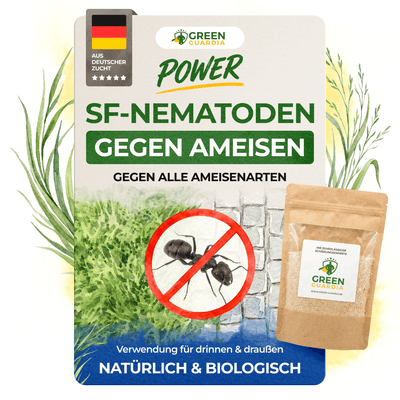
Our nematodes against root flies are intended for biological application in the root zone. The beneficial organisms are applied to the soil with water.
Green Guardia nematodes against root flies
Have you detected root fly larvae or are you planning an application according to product instructions at planting time? Choose the right pack size for your treatment area.
- Goal: suitable larval stages in the soil.
- Application site: the root zone of the brassica plants.
- Application: with water according to application recommendations.
- Pack selection: according to the area in square meters.
What are the benefits of application?
- Target the site of damage: Treatment takes place in the root zone.
- Convenient application: The beneficials are distributed via a water solution.
- Complement measures: Larval treatment can be combined with preventative net protection.
What should you know before buying?
Success depends on the existing larval stages, distribution, and soil conditions. Nematodes do not automatically prevent new flies from flying in and laying more eggs.
Choosing and applying nematodes correctly
When is the right time?
Plan application early and according to current product instructions. If infestation is confirmed, do not wait until numerous plants fail. A rigid schedule for all regions and planting batches is not practical.
What amount do you need?
Measure the intended treatment area. Then select the appropriate variant on our product page for nematodes against root flies . Observe the current dosage and recommended amount of water.
Step-by-step application
- Check requirements: Match target stages and soil temperature with the instructions.
- Prepare soil: Pre-water dry soil. Avoid waterlogging.
- Mix nematodes: Stir into water according to instructions. Stir the mixture regularly.
- Distribute purposefully: Treat the intended root zone evenly. Avoid direct sunlight and strong heat.
- Maintain aftercare: Water afterwards according to instructions and keep the soil evenly moist for the specified duration.
Nematodes are living beneficial organisms. Observe storage and shelf life and plan your order to match the intended application date.
Preventing root flies: Nets and cabbage collars
Crop protection nets can make egg-laying on plants significantly more difficult. Apply them immediately after sowing or planting and close the edges carefully.
Pay attention to the previous year's crop: If root fly pupae are already present in the soil, flies can also hatch under a closed net. Therefore, site selection is part of prevention.
How do cabbage collars help?
Cabbage collars are fitted snugly around the root collar of young plants. They make egg-laying directly on the plant more difficult. Regularly check the fit and condition of the collars.
| Measure | Task | Important |
|---|---|---|
| Nematodes | Combat suitable larvae in the soil. | Observe product instructions and soil conditions. |
| Crop protection net | Hinder influx and egg-laying. | Apply early and close tightly. |
| Cabbage collars | Hinder egg-laying at the root collar. | Fit accurately and check. |
| Stock monitoring | Identify new damage early. | Consider other causes for wilting. |
How do you recognize an improvement?
Pay attention to the continued development of plants that are still viable and new failures in the stock. Plants that have already died do not reliably indicate treatment success.
Frequently asked questions about root flies
What damages the plants: flies or larvae?
The larvae cause the root feeding. The adult flies are primarily relevant for egg-laying.
Which nematodes should I order?
Choose our product intended for this application: nematodes against root flies . Other nematode products are not automatically interchangeable.
Can I still save wilting brassica plants?
That depends on the extent of the root damage. Treatment aims to reduce further feeding but does not immediately restore destroyed roots.
Do nematodes also help against flying root flies?
The described soil application targets suitable larvae. Preventative measures are important for protection against influx and egg-laying.
Why does infestation occur despite a protection net?
Possible causes are open edges, damage, or pupae already present in the soil. Therefore, check the net and cultivation history.
How many nematodes do I need?
The amount depends on the treatment area and product instructions. Choose the corresponding variant on our product page .
Why must the soil remain moist?
Nematodes require moisture for their movement and activity. Keep the soil evenly moist according to instructions, without creating waterlogging.
Can the infestation return later?
Yes. Multiple generations and renewed influx are possible. Continue to monitor even after treatment and maintain preventative protection.