


























































Protecting against spider mites: Effective and eco-friendly methods
Spider mites are one of the most common problems for indoor plants, balcony plants, and in greenhouses – especially during warm, dry periods. Often, an infestation is only noticed when leaves appear dull, show light speckling, or fine webbing develops. The sooner you react, the easier it is to fight spider mites and get your plants back on track – ideally using a combination of natural measures and targeted support.
Causes: Why do spider mites occur?
Spider mites love dry air and warmth. This is precisely why they occur so frequently during the heating season or on sunny windowsills. Additionally, plant stress and an unfavorable microclimate promote their spread.
- Dry air (heating air, conservatory, warm windowsill)
- High temperatures and limited air circulation
- Plant stress due to irregular watering or nutrient deficiency
- Introduction via new plants or cut greenery
- Crowded plants – ideal conditions for rapid spread
Recognition: How do you identify spider mites?
Spider mites are very small – often you see the damage first. Check the undersides of leaves, leaf axils, and young shoots carefully. Typical signs include:
- Light speckling or dot-like pale spots on the leaves
- Leaves appear dull, dry out, or curl
- Fine webbing between the leaf and stem or on shoot tips
- In case of heavy infestation: leaf drop and significantly weakened growth
Combating: Getting rid of spider mites naturally – what really helps?
If you want to get rid of spider mites, a clear, multi-step approach is most effective: contain the infestation, optimize the environment, and stabilize the plant long-term. This reduces the pressure sustainably – without unnecessary stress.
1) Immediate measures: Stop the infestation and prevent spread
- Isolate infested plants (quarantine) so that spider mites cannot spread.
- Shower the plant thoroughly – especially the undersides of the leaves.
- Remove heavily damaged leaves and dispose of them in household waste.
- Clean the location (windowsill, pots, saucers) to reduce residue.
2) Particularly sustainable: Use beneficial insects (predatory mites)
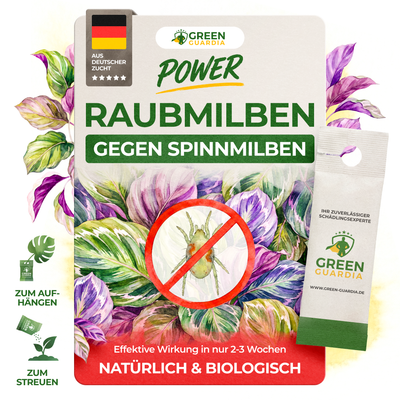
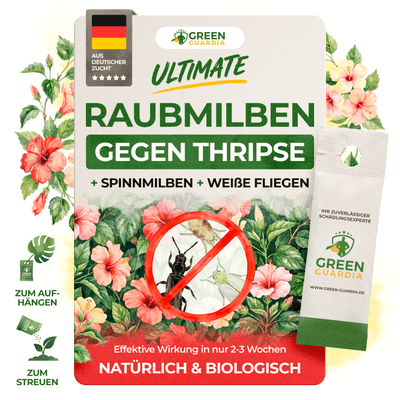
One of the most eco-friendly methods is the use of natural predators. Predatory mites against spider mites are perfect for targeted support. They work directly in the plant's environment and help regulate spider mite populations – ideal if you are looking for a sustainable solution. Especially in the case of recurring infestations, using predatory mites against spider mites is a sensible measure because they target the problem exactly where the spider mites appear.
3) Improve plant climate: Remove the foundation for spider mites
Spider mites feel especially comfortable in dry air. If you stabilize the plant environment, the risk decreases significantly – and the plant can recover better.
- Increase air humidity (e.g., water bowl, humidifier, regular airing)
- Don't place plants too close together – more air circulation helps
- Avoid direct heating air; change the location if necessary
Tip: Always combine several steps: quarantine + showering + better plant climate – and use predatory mites against spider mites as needed. This way, the effect remains stable and sustainable.
Prevention: How to keep spider mites from coming back
To ensure spider mites don't return, a short, regular routine is worth it. The goal is a stable environment and early monitoring so that you can react immediately.
- Keep new plants separate for 7–14 days (quarantine)
- Regularly check the undersides of leaves – especially in dry air
- Provide consistent plant care (watering & nutrients) – avoid stress
- Keep air humidity stable, especially during the heating season
- Use natural support early if there is a recurring risk, e.g., predatory mites against spider mites
Frequently asked questions about spider mites
Why do spider mites occur especially in winter?
During the heating season, the air is often dry and warm – exactly what spider mites like. This is why they occur particularly frequently on windowsills, near heaters, and in warm rooms.
What is the most effective natural method against spider mites?
A very effective approach is the combination of showering, stable air humidity, and the targeted use of beneficial insects. Predatory mites against spider mites have proven particularly effective because they work directly in the plant environment.
How quickly do spider mites disappear after taking measures?
This depends on the severity of the infestation and the location. With early intervention, the situation can visibly improve within a few days. It is important to continue monitoring the plant and to consistently combine measures.
How do I prevent spider mites from coming back?
Keep air humidity stable, check the undersides of leaves regularly, and put new plants in quarantine first. If there is a recurring risk, an early application of predatory mites against spider mites can help to permanently stabilize the balance.
Take action now:
If you want to fight spider mites, start immediately with quarantine and a thorough showering of the plant. Subsequently, stabilize the plant climate (more humidity, better air circulation) and, if necessary, use predatory mites against spider mites – for eco-friendly, sustainable protection of your plants.


